Brocade QSFP-SR1.2-100G Compatible 100G QSFP28 SR1.2 Transceiver Module
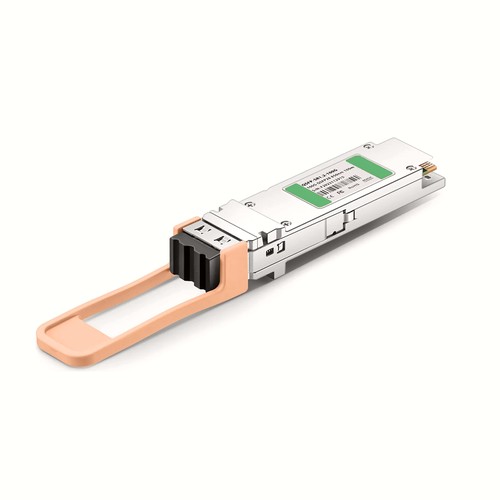
This Brocade QSFP-SR1.2-100G compatible transceiver provides 100G connectivity in a hot-swappable QSFP28 package. Its optical design operates at 850/910nm for up to 70m on OM3 / 100m on OM4 / 150m on OM5, using Duplex LC. Complete parameters and related OEM references help procurement teams match an equipment parts list to a clearly defined optical product.
OEM Part Number: QSFP-SR1.2-100GHT Part Number: QSFP-SR1.2-100G
Product Highlights
- Compatible alternative to Brocade QSFP-SR1.2-100G
- 100G connectivity at 106.25 Gbps
- Optical wavelength: 850/910nm
- Specified reach: 70m on OM3 / 100m on OM4 / 150m on OM5
- Duplex LC / MMF interface
- Digital diagnostic monitoring: Supported
- Operating temperature: -10 to 60 ℃ (14 to 140°F)
Specifications
| HT Part Number | QSFP-SR1.2-100G |
|---|---|
| Manufacturer | HT |
| Form Factor | QSFP28 |
| Max. Data Rate | 106.25 Gbps |
| Wavelength | 850/910nm |
| Max. Cable Distance | 70m@OM3/100m@OM4/150m@OM5 |
| Connector | Duplex LC |
| Media | MMF |
| Transmitter Type | Broadcom/AFCD-V7 |
| Receiver Type | PIN |
| TX Power | -6.2dBm~4dBm |
| Minimum Receiver Power | -8.2dBm |
| Power Budget | 2dB |
| Receiver Overload | 4dBm |
| Power Consumption | ≤4W |
| Extinction Ratio | >3dB |
| DDM/DOM | Supported |
| Commercial Temperature Range | -10 to 60 ℃ (14 to 140°F) |
| Modulation (Electrical) | 4x 25G-NRZ |
| Modulation (Optical) | 2x 50G-PAM4 |
| CDR (Clock and Data Recovery) | TX & RX Built-in CDR |
| Inbuilt FEC | KP4 FEC |
| Packaging Technology | COB Packaging |
| Core Size | 50um/125um |
| Protocols | QSFP28 MSA and IEEE 802.3bm CAUI-4 |
Applications and Optical Link Design
This coherent interface is suited to data-center interconnect, metro transport and managed DWDM links where the host platform supports the stated modulation and FEC modes. Design the optical line around the actual launch power, receiver range, OSNR requirement and span loss; the stated reach is not a substitute for a link-budget calculation. Use matching coherent modules and the appropriate DWDM channel plan at both ends.
Before deployment, check the host port type, supported data rate and firmware requirements. The 100G interface configuration must match the remote equipment; sharing a QSFP28 housing alone does not make two transceiver types interoperable.
For this coherent interface, document the wavelength plan and modulation or FEC settings before commissioning. Measure span loss and verify adequate OSNR. Interoperability depends on compatible coherent modes as well as form factor, so another coherent part number must not be substituted without engineering review.
Optical Acceptance, Diagnostics and Handling
For this model, the specified transmit-power range is -6.2dBm~4dBm; the stated optical power budget is 2dB. Digital diagnostics make later maintenance easier when baseline values are captured at installation. Save the initial readings with the port and OEM reference, then investigate meaningful changes rather than reacting to a single transient value. Diagnostic support depends on the host as well as the module, so unavailable fields should be confirmed with the platform documentation. Diagnostic monitoring is listed as Supported. Before every insertion, keep dust caps in place until the patch lead is ready, avoid touching the optical end face and use an appropriate inspection and cleaning procedure. Do not look into an active optical interface.
Procurement and Asset Identification
A useful purchase order identifies the host platform, expected OEM code and optical standard separately. This prevents a module with the same housing but another wavelength, reach or identification profile from being substituted. For mixed deployments, keep one order line per OEM reference and reconcile each received unit with its intended port. For this model, the principal parameters are data rate 106.25 Gbps, wavelength 850/910nm, rated reach 70m on OM3 / 100m on OM4 / 150m on OM5.
Brocade Compatibility and Factory Testing
The module is checked for host recognition as QSFP-SR1.2-100G, link establishment and diagnostic reporting. Physical cage fit alone is not treated as evidence of compatibility. Equipment model, hardware revision and software release can be reviewed before dispatch where platform behavior is uncertain.
Ordering Information
When ordering, specify QSFP-SR1.2-100G, QSFP-SR1.2-100G, quantity and intended host platform. Project labels can repeat these details for receiving and asset records. Neutral labels, customer packaging and project-specific compatibility review are available on request.
Quality Assurance and Packaging
Each QSFP-SR1.2-100G compatible module is inspected, powered up and functionally checked before protective packing. Dust caps and individual trays shield the interface during transport. Customer references, rack groups and project packing lists can be added for volume orders.
Frequently Asked Questions
Is this an original Brocade transceiver?
No. It is an HT-manufactured compatible alternative for equipment that specifies QSFP-SR1.2-100G, not an original Brocade-branded module.
Which fiber and connector are required?
Use Duplex LC with MMF. The specified maximum reach is 70m on OM3 / 100m on OM4 / 150m on OM5, subject to fiber quality and total link loss.
Can it be mixed with another wavelength or reach version?
Only when the two ends share the same optical standard, wavelength plan and supported data rate. Check the exact part numbers and link budget rather than relying only on the module form factor.
Shipping and Lead Time
Standard configurations normally ship within one to three working days, with production lead times confirmed for larger quantities. International courier, air freight and sea freight are available; customer courier accounts and nominated forwarders are accepted.